Waiting rooms feel uncomfortable because time, uncertainty, and control become psychologically disconnected.
Few everyday environments feel as strangely uncomfortable as waiting rooms. Whether in medical offices, airports, repair shops, government buildings, or service centers, waiting spaces often create a unique blend of boredom, tension, impatience, and emotional unease.
Even short waits can feel surprisingly long inside these environments.
The discomfort is not accidental or imaginary. Waiting rooms combine several psychological stress factors at once: uncertainty, lack of control, social awkwardness, anticipation, and distorted time perception. Environmental design also plays a major role in shaping how emotionally comfortable or stressful a waiting experience feels.
Uncertainty Makes Waiting Feel Longer
One of the biggest reasons waiting rooms feel uncomfortable is uncertainty.
People generally tolerate delays much better when they know exactly how long they will last. Unclear waiting times create mental tension because the brain continuously tries to predict when the situation will end.
This uncertainty increases cognitive stress.
A ten-minute wait with a clear countdown often feels easier than an undefined delay where people constantly wonder, “How much longer?”
Medical waiting rooms intensify this effect because uncertainty often extends beyond timing itself. Patients may worry about diagnoses, procedures, financial costs, or personal outcomes while waiting.
The brain treats uncertainty as psychologically significant, thereby increasing emotional vigilance and discomfort.
Read Why Humans Love Predicting the Future for insight into uncertainty.
Waiting Removes a Sense of Control
Humans strongly prefer environments where they feel agency over time and movement.
Waiting rooms create the opposite experience. People must remain passive while another person or system controls what happens next.
This lack of control contributes heavily to frustration.
In many waiting environments, individuals cannot meaningfully speed up the process, leave comfortably, or fully predict when attention will return to them.
Even small design details can intensify this feeling. Being called unexpectedly, sitting without updates, or lacking clear communication all reinforce a sense of psychological helplessness.
The discomfort often comes less from the actual waiting time and more from the feeling of surrendering control over it.
Social Spaces Create Quiet Tension
Waiting rooms also produce subtle social discomfort.
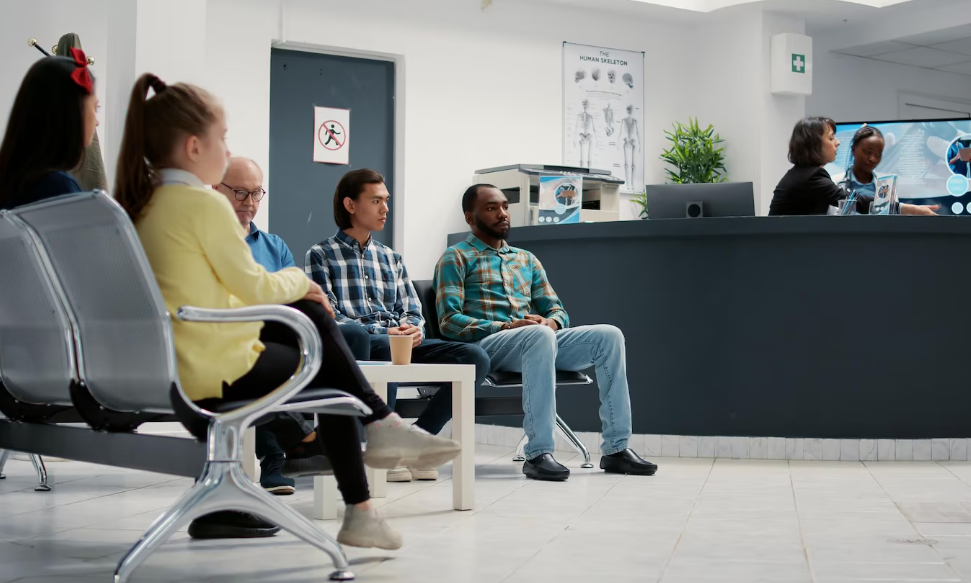
Unlike cafés, restaurants, or entertainment spaces, waiting rooms place strangers together without a clear social purpose or interaction norms. People usually avoid conversation while simultaneously remaining highly aware of one another’s presence.
This creates low-level social tension.
Individuals often monitor their behavior carefully, avoiding eye contact, adjusting their posture, checking their phones repeatedly, or pretending to be occupied to reduce awkwardness.
The atmosphere becomes emotionally restrained.
Medical waiting rooms can feel especially uncomfortable because everyone understands that other people may be anxious, sick, stressed, or emotionally vulnerable. This shared but unspoken awareness adds emotional weight to the environment.
Explore The Science of First Impressions for more on social awareness.
Time Feels Distorted While Waiting
Waiting changes time perception dramatically.
When people are actively engaged in meaningful activity, attention turns outward, and time often feels to pass faster. Waiting reverses this process by directing awareness toward time itself.
The brain becomes hyperaware of passing moments.
Boredom amplifies this effect because there is little stimulation competing for attention. Without meaningful distraction, even short periods may feel unusually long.
This explains why environments with engaging music, televisions, magazines, windows, or calming design elements often feel psychologically easier despite identical wait lengths.
Attention strongly influences perceived duration.
A five-minute wait can feel emotionally longer than thirty minutes spent absorbed in an enjoyable activity.
See Why Time Feels Faster as You Get Older for insight into time perception.
Environment Design Influences Emotional Experience
The physical design of waiting rooms affects comfort more than many people realize.
Lighting, seating arrangement, noise levels, spacing, color choices, temperature, and visual openness all shape emotional response.
Harsh fluorescent lighting, uncomfortable seating, loud televisions, crowded arrangements, or sterile environments tend to increase stress and fatigue.
By contrast, spaces with natural light, softer textures, calming colors, quieter soundscapes, and clearer organization usually reduce psychological tension.
Some modern healthcare spaces intentionally redesign waiting areas to feel less clinical because environmental psychology significantly affects patient stress levels.
Even perceived fairness matters. People become more frustrated when they feel others are being helped out of order or receiving unclear priority.
Smartphones Changed Waiting Behavior
Smartphones transformed waiting-room experiences dramatically.
Before mobile devices became common, waiting often felt more psychologically exposed because people had fewer distractions available instantly.
Today, phones function as portable coping mechanisms during uncomfortable waiting periods. Social media, messaging, videos, games, podcasts, and news feeds help redirect attention away from boredom and uncertainty.
However, phones do not eliminate discomfort.
In some cases, constant phone-checking may actually increase anxiety because users continue monitoring time while simultaneously exposing themselves to stressful information, notifications, or work communication.
Still, digital distraction undeniably softened many aspects of modern waiting culture.
Check Why Humans Are Drawn to Cozy Spaces for more on comforting spaces.
Waiting Rooms Reflect Deeper Human Psychology
The discomfort of waiting rooms ultimately reveals several core aspects of human psychology at once.
People struggle with uncertainty, loss of control, passive time, social ambiguity, and anticipation more than they often realize in everyday life.
Waiting spaces concentrate all of those experiences together in confined environments.
This is why even simple waiting situations can feel emotionally draining despite involving very little physical effort.
The psychology of waiting demonstrates that human discomfort is not determined solely by objective conditions. Perception, control, uncertainty, and emotional context matter just as much.
Sometimes the hardest part of waiting is not the delay itself. It is the feeling of being suspended between what is happening now and whatever comes next.